 Math101 · Independent Ontario learning library
Apprenticeship
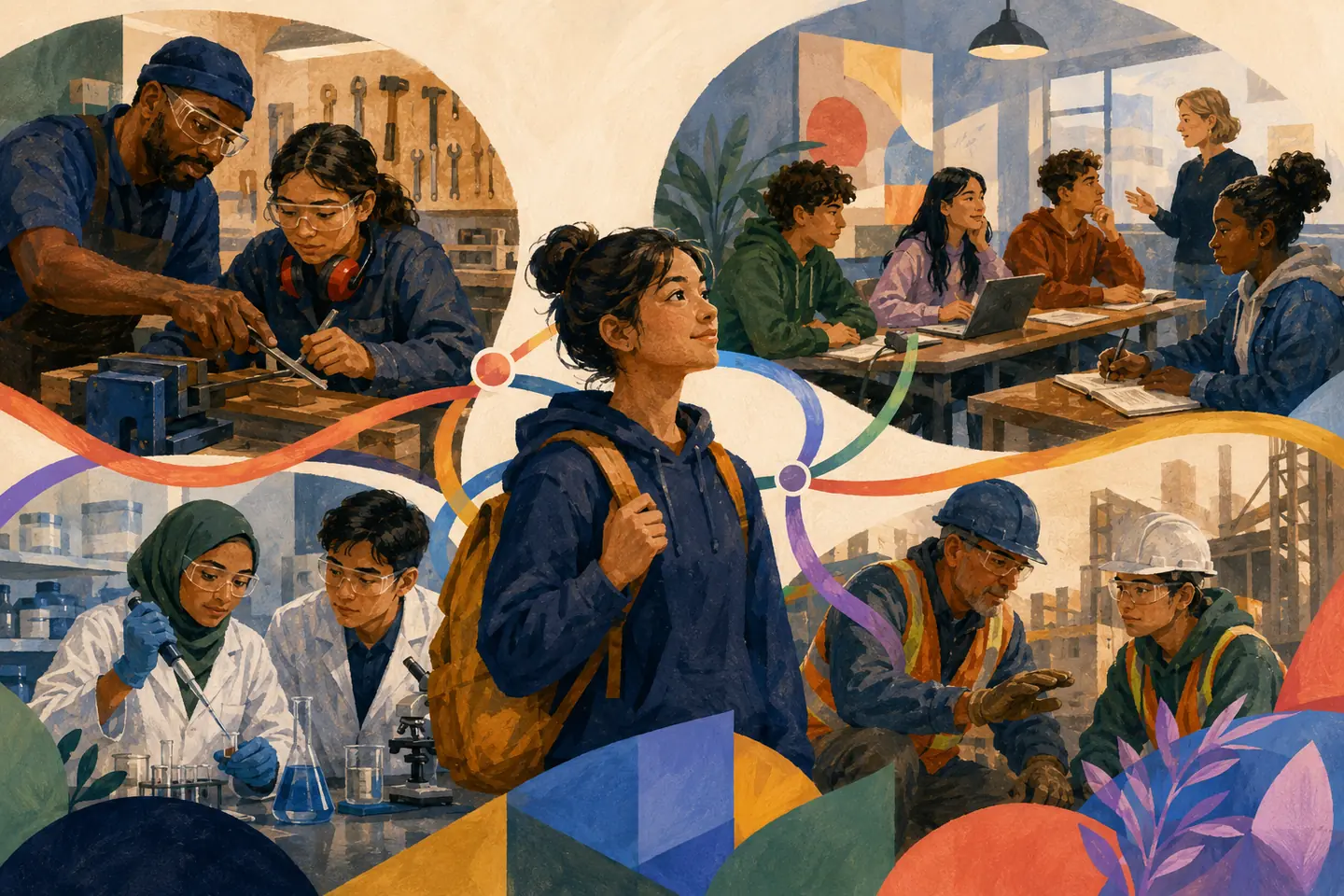
Skilled Trades Ontario explains apprenticeship as training delivered largely on the job with blocks or other formats of in-class instruction. Depending on the trade, training commonly takes several years. The apprentice needs a sponsor and a registered training agreement through the official process.
Questions:
- Is the trade compulsory or non-compulsory?
- What are the training, exam, certification, and registration steps?
- Who is the sponsor, and what work will be learned?
- What wages, tools, safety equipment, transport, and travel apply?
- How much in-school training occurs and where?
- What supports exist if employment with a sponsor ends?
OYAP
The Ontario Youth Apprenticeship Program allows eligible secondary students to explore and, in some arrangements, begin apprenticeship-related training through co-operative education. Local availability and registration details matter.
Ask whether the placement is:
- exploration only;
- connected to apprenticeship registration;
- earning secondary co-op credits;
- linked to Level 1 or another recognized component;
- dependent on employer/sponsor availability.
SHSM
A Specialist High Skills Major is a specialized secondary-school program in an economic sector. It can combine a bundle of credits, sector-recognized certifications or training, experiential learning, and reach-ahead experiences.
SHSM can help a student explore and document learning. It does not guarantee admission, apprenticeship, or employment.
Co-operative education
Secondary co-op connects course expectations with a placement and earns secondary credits under school supervision. Quality depends on the placement, learning plan, safety, supervision, student readiness, and fit.
Dual credits
Dual-credit opportunities can allow eligible students to work toward secondary and college credit or participate in college-delivered learning. Eligibility, course transferability, location, and support are program-specific.
Compare the actual result
| Option | Ask what is earned | Ask what is not guaranteed |
|---|---|---|
| Apprenticeship | Registered training progress, hours, in-school level | Continuous employment, certification, job outcome |
| OYAP | Co-op credit, exploration, possible registration/training | Sponsor or full apprenticeship continuation |
| SHSM | OSSD designation and completed components | Admission or employment |
| Co-op | Secondary credits and placement learning | Apprenticeship or permanent job |
| Dual credit | Named secondary/college credit | Universal transfer to every program |
Course selection still matters
A trades-focused student still needs cohort-specific OSSD requirements and the prerequisites for any college, apprenticeship in-school, or backup route. Mathematics, communication, science, technology, business, and transportation needs vary by trade.
Family due diligence
- Visit a real workplace or training facility.
- Ask about physical demands, safety, weather, shifts, travel, and layoffs.
- Compare union/non-union and sector contexts without assuming one story represents all.
- Price tools, vehicle, insurance, and unpaid training periods.
- Check the official trade profile and certification requirements.
- Ask how the pathway supports a student with an IEP, disability, or other accommodation need.
Do you need to find an employer before becoming an apprentice?
An apprenticeship requires a sponsor for the registered training agreement. Skilled Trades Ontario explains how to start and where to seek support; school-based OYAP routes may help eligible students connect with opportunities.
Sources
- Skilled Trades Ontario: starting an apprenticeship
- Skilled Trades Ontario: trade information
- Skilled Trades Ontario: what parents need to know
- Ontario Schools policy and program requirements
- The student’s board OYAP, SHSM, co-op, and dual-credit pages
