 Math101 · Independent Ontario learning library
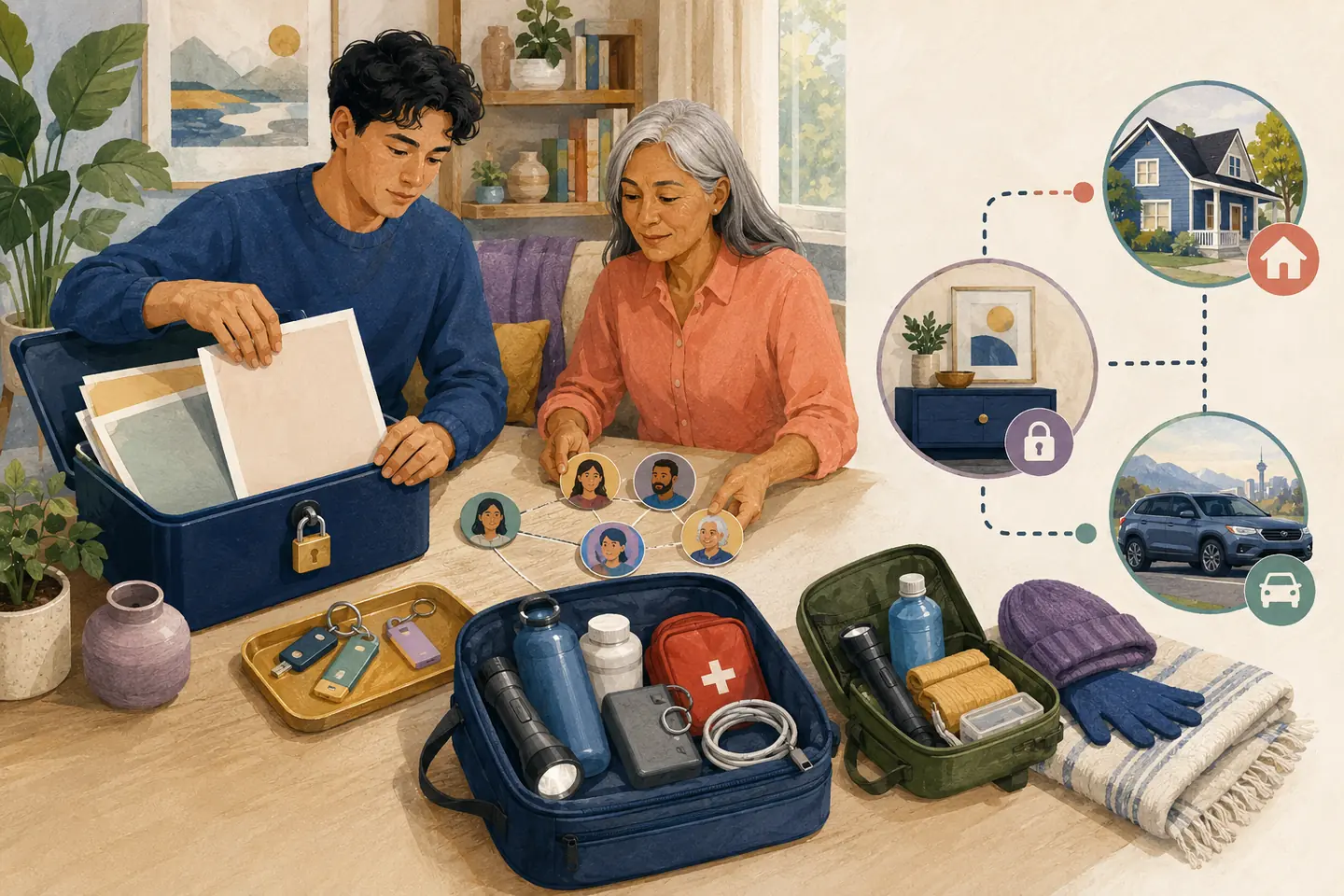
Separate originals, copies and access instructions
Originals
Protect identity and legal documents such as:
- birth/citizenship/immigration documents;
- passport;
- health card and provincial photo/driver’s card;
- SIN confirmation (do not carry it routinely);
- lease, vehicle ownership and insurance policies;
- education records that are difficult to replace;
- legal documents relevant to the person.
Use a secure, dry location with appropriate fire/water protection. A locked container is not useful if it cannot be reached during evacuation; balance security and access.
Copies
Government of Canada emergency guidance recommends easy access to essential documents and pictures of household members, with copies of items such as birth certificates, passports, wills and insurance information in a safe, accessible location.
Store an encrypted digital copy and a limited sealed paper copy in the emergency kit or alternate location. Mark copies as copies where useful. Avoid leaving full SIN, passport and banking documents unencrypted in email/cloud folders.
Access instructions
A trusted contact may need to know:
- location of emergency plan and policies;
- insurer/landlord/campus/employer contacts;
- emergency medical information;
- who should be contacted;
- where legal authority documents are stored.
They should not receive everyday passwords or pretend to be the account holder. Use legitimate emergency-access, power-of-attorney, executor or representative arrangements where needed, with legal advice for legal documents.
One-page emergency card
Carry only necessary information:
- name and two emergency contacts;
- critical allergies/medical conditions;
- current essential medications;
- accessibility/communication needs;
- primary care/pharmacy where useful;
- campus/work security contact;
- insurer roadside/emergency number;
- “call 911” instruction for immediate danger.
Discuss medical identification with a healthcare professional for serious conditions. Do not publish a detailed health history on an unlocked phone screen.
Make a household/residence plan
In 20 minutes, answer:
- What emergencies are likely locally—fire, extended power loss, severe storm, flood or evacuation?
- What are two exits from the home/building?
- Where is the outside meeting point?
- Who is the out-of-area contact if local networks are overloaded?
- How will roommates account for one another without re-entering danger?
- How are pets, mobility, medication, CPAP or other equipment handled?
- What campus/residence alert system must be enabled?
- Where will the household go for 24–72 hours?
Follow building/residence evacuation rules. Never use elevators during fire unless authorities/building plans direct it for accessibility evacuation.
Build a 72-hour kit gradually
Use Get Prepared Canada’s emergency-kit checklist, adapted to the household. Typical categories include:
- water and non-perishable food;
- manual can opener;
- flashlight/radio and batteries or wind-up equipment;
- first-aid supplies;
- masks, sanitation and personal items;
- chargers/power bank;
- cash in small denominations;
- keys and contact list;
- seasonal clothing/blanket;
- copies of plan/documents;
- medications and disability-related supplies planned with providers;
- infant, elder, pet, religious or cultural needs.
Check the kit twice a year. Replace expired food, water, batteries and medication under professional guidance. Keep it portable; a perfect kit that cannot be carried is less useful.
Medication and power-dependent equipment
If someone relies on insulin, oxygen, mobility equipment, refrigerated medication, CPAP or another powered/consumable device:
- ask the healthcare/equipment provider how to plan safely;
- maintain current prescription and supplier contacts;
- identify backup power or alternate location compatible with manufacturer guidance;
- do not stockpile restricted medication outside lawful/medical direction;
- register for utility/campus emergency support programs where available;
- create an evacuation assistance plan.
Government of Canada has additional preparedness guidance for persons with disabilities.
Financial and account recovery
An emergency can include a stolen phone/wallet rather than a storm. Keep, separately from the wallet:
- bank/card fraud numbers and last four digits;
- mobile carrier contact and account PIN process;
- credit bureau contacts;
- device serial/IMEI information;
- list of automatic bills;
- backup multi-factor authentication codes stored securely;
- landlord, insurer and campus contacts;
- small emergency cash.
Do not create a plain-text “master passwords” document. Use a password manager with a documented emergency-access method if appropriate.
If a wallet or phone is lost
- Use another device to locate/lock/erase where appropriate.
- Contact bank/card issuers and mobile carrier through official channels.
- Change compromised passwords, starting with email.
- Report stolen government ID to issuing authorities/police as directed.
- Monitor accounts and both credit reports; consider fraud alerts.
- Replace documents using official sites, not paid lookalike services.
- Record reference numbers.
Emergency car kit
Government of Canada’s car-kit checklist includes food, water, blanket, clothing, first aid, shovel/scraper, flashlight, whistle, maps, plan/document copy, traction material, washer fluid, tow rope, jumper cables, extinguisher and warning device. Adapt for season and vehicle; secure heavy items.
Roadside judgment: if the vehicle stops, move to a safe location if possible, use hazard lights, assess traffic/weather and call 911 for immediate collision/danger. Do not stand in a live lane or attempt a repair where traffic, unstable ground, poor visibility or weather makes it unsafe. Use roadside assistance.
Twice-yearly audit
Should I keep photos of ID on my phone?
Only after considering necessity and security. An unlocked photo library can expose identity data. Prefer encrypted storage with device lock, backups and remote-wipe capability; carry original ID only when needed.
Should parents keep an adult student’s passwords?
Usually no. Use legitimate emergency contacts and secure recovery methods. Password sharing can violate account terms and increase risk. A trusted person can know where essential documents are without controlling daily accounts.
How much cash belongs in a kit?
There is no universal amount. Keep a modest amount in small denominations based on household needs and security. Do not weaken rent/food reserves or create a theft target.
